
The Lineolated Parakeet: A Tiny, Calm, Horizontal Clown
I’m just a regular pet person—not a parrot professor—but I have fallen hard for the lineolated parakeet, aka the linnie. If you’ve ever wanted a bird that walks like a tiny feathered slinky and chats softly instead of screaming like a smoke alarm, this might be your match. Named for the fine black bars on its back, wings, and sides, the linnie is one of the calmest, quietest members of the parrot family. And yes, in 2026, that apartment-friendly trait is still worth its weight in millet. 🐦
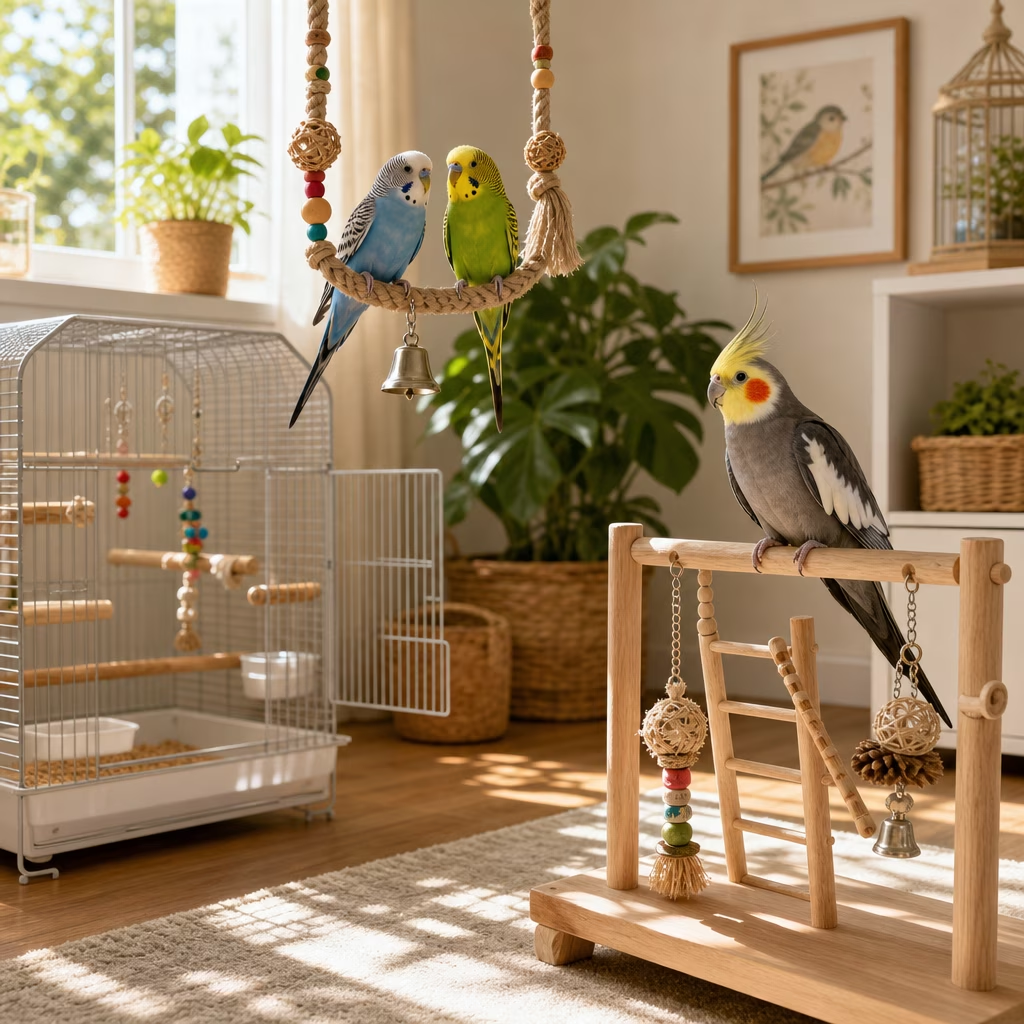
| Quick fact | Details |
|---|---|
| Common names | Lineolated parakeet, barred parakeet, Catherine parakeet, linnie |
| Scientific name | Bolborhynchus lineola |
| Adult size | 6 to 7 inches |
| Life expectancy | About 10 years on average in captivity, up to 20 with proper care |
| Personality | Calm, social, playful, quietly comical |
Wait, Is It a Budgie? No, It’s a Linnie.
People sometimes mistake linnies for budgies, but linnies are stockier and have a different swagger. Budgies sit upright like tiny soldiers; linnies like to perch and walk with their bodies almost parallel or horizontal to the ground. I call it the feathered skateboard posture. They also enjoy walking as much as flying, which is unusual and adorable. And water? They love it. A linnie will happily turn a water dish into a tiny spa. 🛁
Where Do They Come From?
Wild linnies live in Mexico, Central America, and South America, in higher-elevation cloud forests and dense rain forests, including the Peruvian Andes. In winter they forage at lower elevations. They live in flocks of up to 20 birds, which explains why a solo linnie wants to be your flockmate. If you adopt one, be ready to be an honorary bird. They bore easily. A bored linnie is a recipe for tiny mischief.
Personality: Calm, Social, and a Little Bit Clownish
Hand-fed babies develop charming, even-tempered personalities. They’re incredibly social and love to sit on their owners. They’re about budgie or lovebird size but usually calmer. I’d say they’re the chill roommate of the parrot world—except when they’re burrowing under a blanket and acting like a feathered ferret. They need ample daily playtime. How much? Plan for 3 to 4 hours out of the cage per day. That’s not a typo. If you can’t supervise a bird-proofed area for that long, maybe get a houseplant. A ceramic bird won’t chew your books.
Can They Talk?
Yes, sort of. Their natural call is soft and almost song-like. They can learn to talk and whistle, and they’re good at mimicking sounds, though their vocabulary is more cute party trick than Shakespearean actor. Because they chatter rather than screech, they can live in an apartment with close neighbors. Is that not the dream? A pet that says hello in a whisper instead of waking the whole building. 💬
Colors and Stripes
Wild linnies are mostly green with black and dark green stripes on the back, wings, and sides. The undersides of the wings are blue, and tail feathers are dark green. They have horn-colored beaks and brown eyes. Captive-bred birds come in blue, cobalt, turquoise, and white mutations. Males and females look nearly identical, but sharp-eyed people may notice more black stripes on males. I’ve tried to count stripes on a friend’s linnie. I failed. The bird judged me.
Housing and Chew Toys
A single linnie can do fine in a 24-inch square cage minimum, provided it gets plenty of outside time. Bigger is always better. They can also do well in aviaries with other linnies or related small species, but small flocks can get noisy. Like all parrots, they chew. Give them acceptable chew toys and natural wood branches so they learn what is legal. Otherwise your furniture becomes the buffet.
Diet
In the wild they eat seeds, fruits, insects, and larvae. In captivity, feed a high-quality seed and pellet mix plus bird-safe fresh fruits and vegetables. A bird eats up to 1 tablespoon of food per day. Offer fresh produce every other day, with more vegetables than fruits. Fruits can cause digestive issues; if droppings get watery, cut back on fruit. Fresh sprouts and spray millet are treats. Provide calcium via cuttlebone or mineral block. Seeds vs. pellets? Variety is your friend. And no, a bowl of sunflower seeds is not a balanced diet. I wish it were. It is not. 🍎
Health and Grooming
Linnies grow nails fast, so regular trims are needed. They love bathing in a standing water dish and will accept weekly or even daily misting with lukewarm water from a spray bottle. Let them preen and dry in a draft-free spot. They can go through a teenage biting phase, but it passes, and they’re too small to do severe damage. Watch for vitamin deficiencies and fatty tumors; many experts recommend sprouted seeds as a preventive measure. Small parrots can hide illness, so find an avian vet before you need one. 🧠
Pros and Cons
| Pros | Cons |
|---|---|
| Affectionate and calm | May go through an aggressive adolescent phase with biting |
| Intelligent; can learn to talk | Needs 3 to 4 hours of exercise and mental stimulation daily |
| Quieter than many other parakeets | Can be a bit noisy in small flocks |
Cost and Adoption
In 2026, breeders typically sell linnies in the $200–$300 range. You can also find them through rescue and adoption organizations. If you go to a breeder, ask how long they’ve been breeding and working with the species. Choose an alert, active bird with bright eyes, clean feathers, and a full crop. Reputable breeder directories and rescue groups are your friend. Don’t buy a bird on impulse because it looks like a green potato with stripes. I mean, it does, but still.
Final Verdict
The lineolated parakeet is not feathered furniture. It’s a social, intelligent, quietly comical little companion that wants to be part of your daily life. If you have 3 to 4 hours to supervise playtime, a safe bird-proofed room, and a sense of humor about tiny beak marks on your notebook, a linnie might be your perfect match. If you want a pet that sits still and never chews, perhaps consider a rock. Rocks are very calm. But they won’t whistle back at you, and where’s the fun in that?
Comments