
Goffin’s Cockatoo: Is This Clever, Compact Parrot Right for You?
If you’ve ever wondered whether a cockatoo could fit into your life without taking over your entire house, let me introduce you to the Goffin’s cockatoo. I first fell for these birds because they pack the classic cockatoo charm into a noticeably smaller frame. But is a compact cockatoo really a low-maintenance cockatoo? Not exactly. Let me walk you through what I’ve learned about keeping one happy and healthy in 2026.
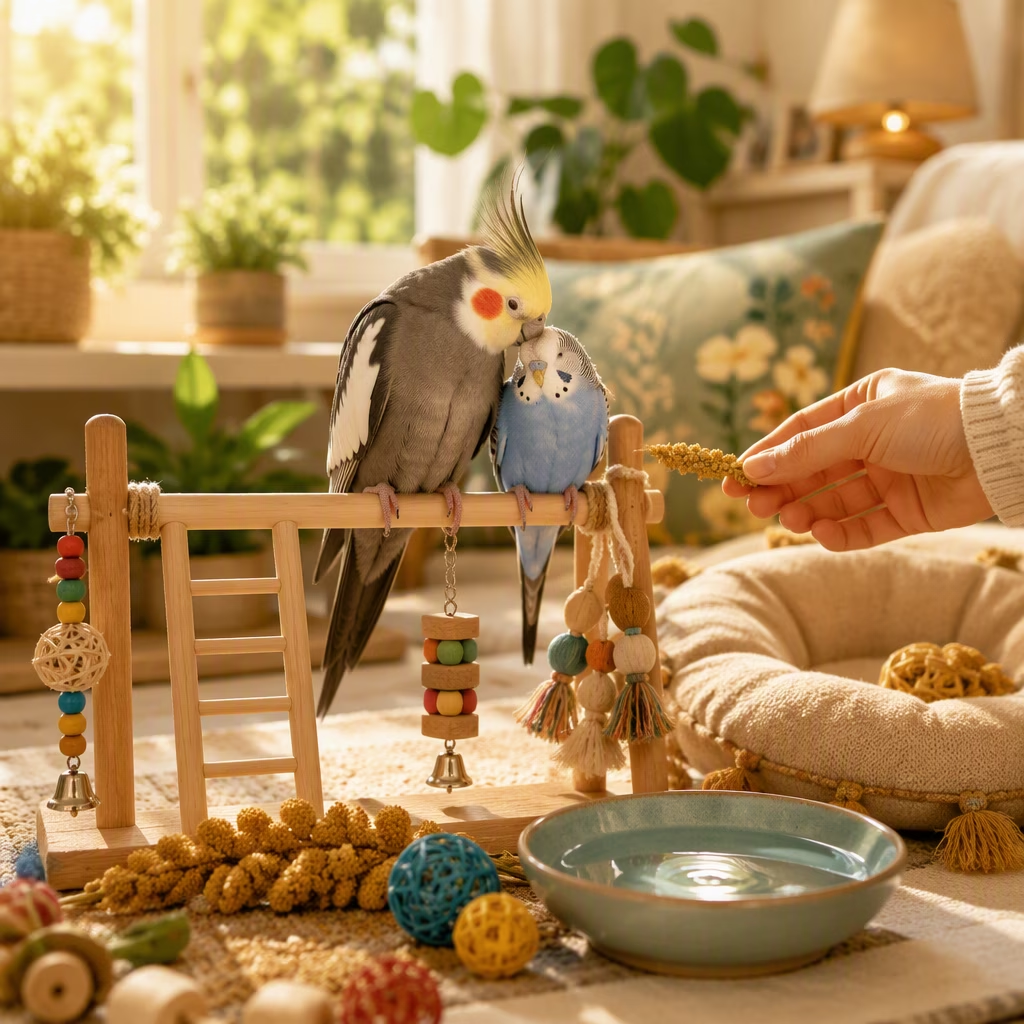
Meet the Goffin’s Cockatoo
Sometimes called the Tanimbar corella, the Goffin’s cockatoo (Cacatua goffini) is one of the smallest cockatoo species. An adult usually measures between 12 and 13 inches long, which is roughly the size of a cockatiel. That smaller size makes it appealing if you want a parrot with a big personality but don’t have room for a huge Moluccan or umbrella cockatoo. With proper care, a Goffin’s can live 30 to 40 years, so this is very much a long-term companion.
| Feature | Goffin’s Cockatoo |
|---|---|
| Common name | Goffin’s cockatoo, Tanimbar corella |
| Scientific name | Cacatua goffini |
| Adult size | 12–13 inches long |
| Life expectancy | 30–40 years |
| Native region | Tanimbar Islands, Indonesia |
Where Do They Come From?
In the wild, Goffin’s cockatoos live in the tropical forests of Indonesia’s Tanimbar Islands, including Larat, Selaru, and Yamdena in Maluku province. They can also be found in parts of New Guinea. Unfortunately, habitat loss and trapping for the pet trade have made them a threatened species. They are now protected, and if you want to keep one in the United States or many other countries, you need a CITES permit. That permit confirms your bird was captive-bred, not illegally taken from the wild. When I talk with new owners, I always recommend asking for that paperwork early, because a responsible breeder will be happy to provide it.
Personality and Intelligence: A Big Bird in a Small Package
Goffin’s cockatoos are famously social, playful, curious, and affectionate. They bond strongly with their people and can be surprisingly outgoing. You might think a smaller cockatoo would be a quieter, more reserved pet, but these birds have what I can only describe as a big-bird attitude. They love to clown around, explore, and insert themselves into whatever you’re doing.
Are they smart? Absolutely. A scientific study tested Goffin’s cockatoos with various interlocking mechanical puzzles, and most birds solved the devices after just one failed attempt. Some needed a human demonstration, while others figured things out completely on their own. That intelligence is impressive, but it also means you should expect a crafty escape artist. After watching you open the cage latch a few times, many Goffin’s will learn to do it themselves. I’ve seen owners come home to an empty cage and a very proud bird sitting on top of it.
Compared with larger cockatoos, Goffin’s are relatively quiet. But “relatively quiet” is not the same as silent. They will scream if they want your attention, so you’ll need to teach them acceptable ways to ask for company. They are not the best talkers, though with patient training some can learn a few words. Many are excellent mimics of sounds around the house. If you want entertainment, turn on some music; Goffin’s cockatoos often love to dance and bob along to the beat.
Appearance: Not Just Plain White
At first glance, a Goffin’s looks mostly white, but there are lovely details if you look closely. They have touches of light salmon or pink on either side of the beak. That same soft color can appear near the head when the bird fans out its crest. Under the wings, you might notice pale yellow feathers that make their flight surprisingly beautiful. The beak and feet are pale gray. If you want to tell males from females, check the eyes: a male typically has a black iris, while a female has brown eyes.
Care and Social Needs
These birds need daily interaction. I recommend planning for several hours of quality time every day, not just having the bird in the same room. They bond closely and can develop behavioral problems if they feel ignored. Neglected Goffin’s cockatoos may start feather plucking or skin picking, which can lead to bacterial, viral, and fungal infections. That is heartbreaking to see, and it can take months or years to reverse.
Because they are so social, I advise setting boundaries early. Find a balance between too much and not enough attention. That way your bird stays well socialized but can also tolerate some alone time when you are away. A cage for a Goffin’s should still be substantial: at least 5 feet tall, 24 inches deep, and 36 inches wide. These birds love to chew, so choose a tough cage, preferably wrought iron, and expect to replace toys regularly.
Feeding a Goffin’s Without Overfeeding
In the wild, Goffin’s eat seeds, fruits, nuts, berries, blossoms, roots, leaf buds, and the occasional insect. In captivity, they are prone to obesity and fatty liver disease if they eat too much high-fat food. I follow a simple rule: a high-quality formulated pellet should make up about 75 percent of the diet, with fresh vegetables, grains, greens, and a little fruit making up the remaining 25 percent.
A daily portion of about 3/4 cup of pellets and 1/4 cup of fresh produce is a good starting point. If your bird finishes everything, you can add a small amount. For treats, I like sprouted seeds much better than dried seeds because dried seeds are high in fat. Nuts should be occasional, not the main event.
Exercise and Enrichment
Goffin’s cockatoos need a minimum of three to four supervised hours outside the cage each day. That time allows them to stretch, climb, play, and feel like part of the household. I recommend getting a play stand so your bird has a personal gym. Add interactive toys, puzzle toys, knots to untie, and items they can safely take apart. Chew toys are essential because they satisfy the natural urge to bite. You can also hide treats to tap into their foraging instinct and keep that clever brain busy.
Pros and Cons at a Glance
| Pros | Cons |
|---|---|
| Social, friendly, and affectionate | Can scream when it wants attention |
| Not as loud as larger cockatoos | Needs 3–4 hours of supervised out-of-cage time daily |
| Can learn to dance and say a few words | Smart enough to escape from its cage |
| Smaller size means a more manageable cage | Prone to feather plucking if neglected |
Is a Goffin’s Right for You?
Before bringing one home, I strongly suggest spending time with a local breeder’s birds. Ask about the bird’s history and temperament. A captive-bred Goffin’s cockatoo typically costs between $1,000 and $3,000, though prices can vary. If you adopt from a rescue, proceed with care. Many rescued Goffin’s were neglected, and their self-destructive behaviors can take significant time and patience to recover from.
So, is a Goffin’s cockatoo the right companion for you? If you have several hours a day to interact with a clever, social bird, and you don’t mind a wonderfully mischievous roommate, this species might be perfect. If you’re looking for a quiet or hands-off pet, I’d gently suggest looking elsewhere. For the right person, though, a Goffin’s is one of the most delightful compact parrots you can share your home with.
Comments