
Cockatiel Care in 2026: A Humorous Guide to My Tiny Feathered Roommate
I never planned to share my apartment with a tiny Australian dinosaur that whistles at my coffee maker, yet here we are in 2026, and my cockatiel—Nymphicus hollandicus, if you want to be fancy—runs the place. Also called a tiel, quarrion, or weiro, this small parrot packs a crest, a cheek patch, and an attitude into a 12-to-13-inch body that weighs about as much as a granola bar (2 to 4 ounces). With proper care, expect 15 to 20 years of roommate drama, and occasionally up to 30 if the universe is feeling generous. So, yes, this is a long-term commitment, not a spring fling.
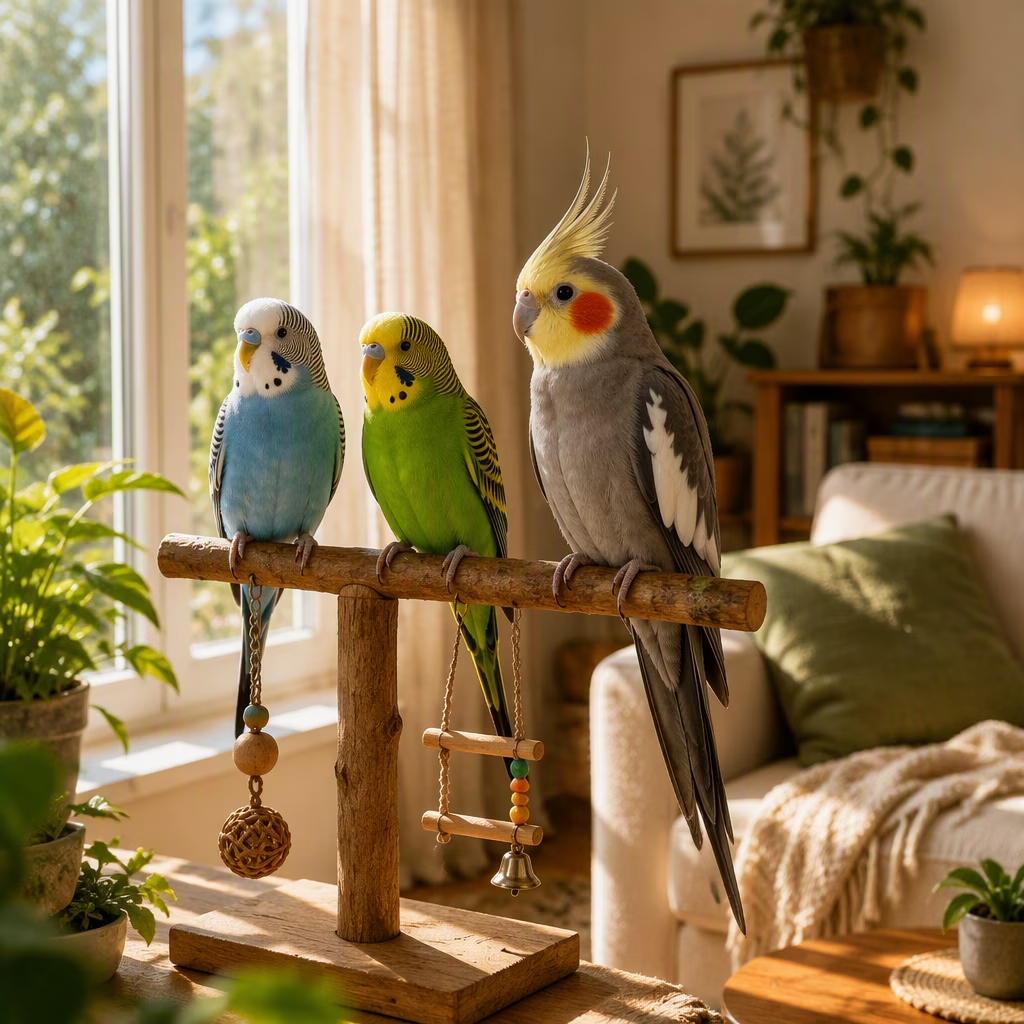
Cockatiels come from the Australian Outback, which explains why mine acts like a tiny sunburnt cowboy. First discovered in 1770, they are the smallest members of the cockatoo family and live in big, noisy flocks in the wild. They became popular pets in the 1900s, and these days they can no longer be trapped and exported from Australia. Good for them. Bad for anyone hoping to import a free-range Outback bird. You will be adopting from a breeder, rescue, or pet store instead.
Personality-wise, cockatiels are gentle, affectionate, and often enjoy being held and petted. But do not mistake them for plush toys. They are not necessarily into cuddling. Mine wants to be near me constantly—on my shoulder, on my keyboard, on the exact page of the book I am reading—but if I try to snuggle him like a teddy bear, I get a look that says, Try that again and I will nibble your ear. Untamed birds can be aggressive and nip. The fix is not yelling, which only makes them timid. Ignore bad behavior, reward good behavior, and act like a polite roommate who happens to be covered in feather dust.
They are smart. Scary smart. They can learn tricks: waving, whistling, bell ringing, and staring at a mirror for hours while talking to the other bird. Males have the reputation for better mimicry, but females are no slouches either. Both sexes may copy alarm clocks, phones, and wild birds outside. Mine has learned the microwave beep and now uses it to summon me like a servant. Charming.
Color mutations are where cockatiels become a fashion show. Wild birds are gray with yellow faces, crests, and orange cheek patches. Males tend to have brighter faces; females have bars under their tail feathers. Captive breeding gave us albino, lutino, pied, pearl or laced or opaline, cinnamon or fawn or Isabelle, silver, emerald, creamface, pastelface, whiteface, and yellow cheek varieties. Sexing can be tricky, especially in young birds, so genetic testing is the grown-up move.
Housing is simple but not lazy. A pair keeps each other company, but they may bond less with you and mimic less. A single bird is fine only if you can spend serious time daily. Otherwise, get a pair to prevent loneliness. Cockatiels are messy and produce powdery dust on their feathers, so bathe or spray them weekly and clean the cage regularly. A cage should be at least 20 inches square and 26 inches tall, with bar spacing no more than 3/4 inch wide so heads do not get stuck. Horizontal bars help climbing. Add perches at different levels. Clip wings and nails twice a year, ideally with a vet or breeder if you are squeamish, because doing it wrong can end badly. Keep the cage out of drafts and away from the kitchen; fumes from heated Teflon cookware can kill birds. Never feed avocado, chocolate, coffee, or salt.
Diet is where many cockatiels suffer. Nutritional deficiency is common because too many live on seeds alone. Seeds should be no more than 30 percent of the diet. Pellets provide balance, and fresh vegetables and fruit add vitamins. A cockatiel eats about 1 tablespoon of food per day, so every bite matters. Offer seed or pellet mix every morning, plus fresh produce in a bowl, and remove uneaten fresh food after an hour. Try hard-boiled eggs, legumes, cooked meats in moderation, and sprouted seeds. Fatty liver disease is a risk with high-carb, high-fat diets and no exercise. Respiratory disease and psittacosis are also threats, so at the first wheeze, sneeze, cough, or nasal discharge, see an avian vet. Fast action saves lives.
For fun, give toys, perches, ladders, and at least an hour outside the cage if possible. Cockatiels are active and playful. They are also quieter than many parrots, which makes them decent apartment companions. They are good for first-time bird owners: friendly, low-maintenance, and smaller than a macaw's lunch. But they can nip if not hand-raised or trained, may not talk if housed with another cockatiel, and will leave powder everywhere.
| Pros | Cons |
|---|---|
| Smaller parrot | Can nip if untrained |
| Quieter, can learn to talk | May bond less if kept in a pair |
| Does not need tons of outside-cage time | Powdery, messy feathers |
When choosing, pick a hand-fed baby or a young bird handled regularly. Prices vary by color, often $100 to $400 from a conscientious breeder. Pet stores may have unknown histories and older, harder-to-tame birds. Look for bright, alert, active birds with smooth shiny feathers, clean vent area, smooth feet, good nails, a smooth beak, and clear nostrils. Avoid a quiet, puffed-up bird—it may be ill. Check rescues, adoption groups, and breeders. If you want similar species, consider a budgerigar, lovebird, or Pacific parrotlet.
So, in 2026, my cockatiel remains a tiny feathered comedian with a whistle, a crest, and a talent for making me sweep. Would I trade him? Not a chance. Would I warn you that he is a 20-year commitment who can outlive your phone, your laptop, and possibly your patience? Absolutely. Get one if you can offer time, space, cleanliness, and mental enrichment. Otherwise, admire them from afar—and keep your avocado toast to yourself.
Insights are sourced from UNESCO Games in Education, underscoring how games can be structured to reinforce learning through clear feedback loops, routine-building, and gradual skill progression—ideas that map neatly onto cockatiel care when you treat training like a “daily quest” (short, repeatable sessions for step-up, recall, and calm handling) and enrichment like “level design” (rotating toys, foraging opportunities, and safe out-of-cage exploration) so your tiel’s long-term wellbeing stays engaging rather than becoming a grind.
Comments